
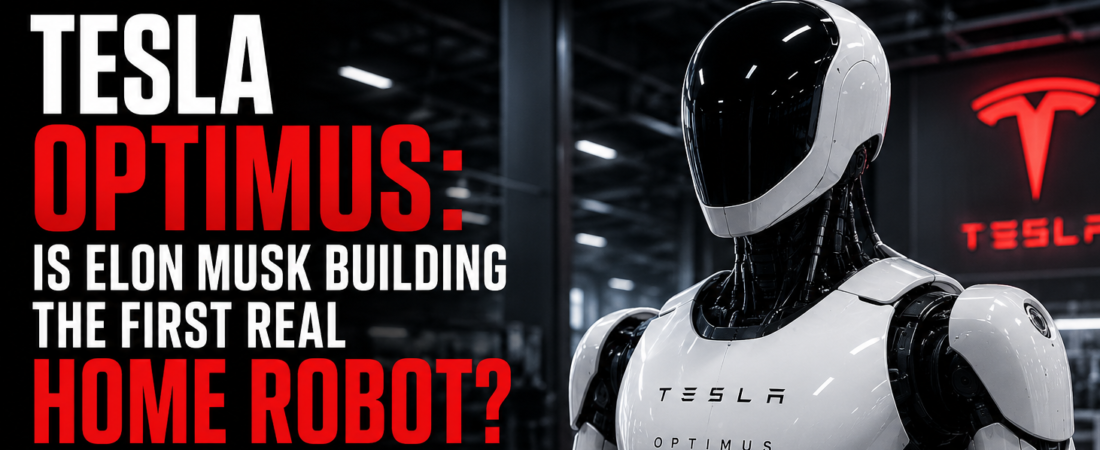
Tesla’s Optimus project aims to build a general-purpose humanoid robot. That ambition is different from a proven, widely available household assistant.
Tesla describes Optimus as a robot intended for unsafe, repetitive or boring tasks. Its stated engineering challenges include balance, navigation, perception and interaction with the physical world.
Why is everyone talking about Optimus?
Tesla brings experience from several relevant fields:
- Advanced AI from self-driving technology
- Powerful battery engineering
- Mass production experience
- Real-world robotics testing
What could Optimus do?
Possible future applications discussed for humanoid robots include the following. This is a list of potential uses, not verified Optimus capabilities:
- Carrying groceries
- Cleaning homes
- Assisting elderly people
- Warehouse work
- Factory automation
- Dangerous industrial jobs
Why this matters
Success would require reliable performance, safe operation around people and an affordable total cost. This article does not establish a timetable for mass household adoption.
Challenges ahead
Tesla still faces major obstacles:
- Human-like balance and movement
- Reliable hand precision
- Real-world safety
- Cost reduction for mass market
Final thoughts
Optimus is a project to watch, but useful deployment should be judged by sustained task completion, human intervention rates and operating costs.
A demonstration alone cannot establish that a robot can operate independently in an unfamiliar home.
Editorial review: 7 September 2026. This explainer describes goals and open questions; it is not a product review or purchase recommendation.